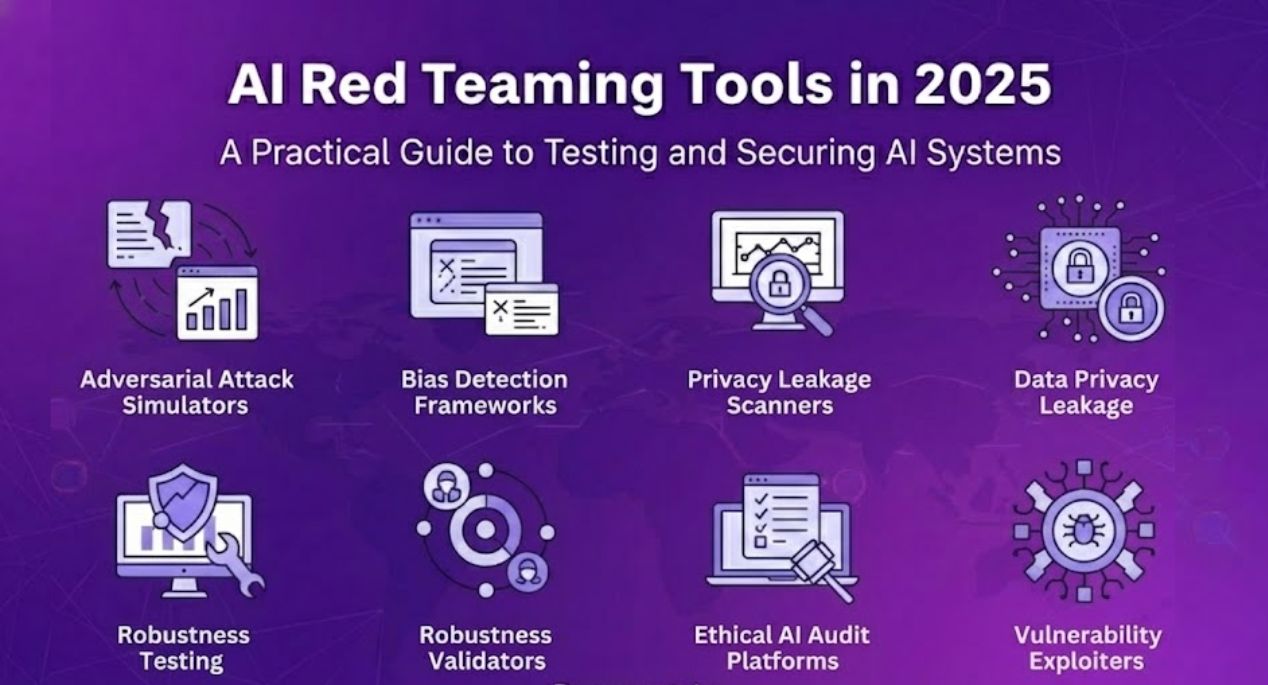
Artificial intelligence systems are becoming part of everyday products. From chat assistants to recommendation engines and automated decision systems, AI is no longer experimental. Because of this growth, the responsibility to make AI safe, reliable, and predictable has also increased. This is where AI red teaming enters the picture. Instead of waiting for problems to appear in real users’ hands, teams now actively test their own AI systems to understand where things might break.
AI red teaming is not about attacking systems with bad intentions. It is a controlled and ethical practice where developers and security teams intentionally try to push AI models into failure. They explore how models react to confusing prompts, misleading data, unexpected language, or risky scenarios. The goal is simple. Find weaknesses early, fix them properly, and create systems that behave responsibly under pressure.
What AI Red Teaming Really Means
At its core, AI red teaming is a form of stress testing. Just like engineers test bridges before opening them to the public, AI teams test models before deploying them widely. This testing includes trying to bypass safety filters, trigger harmful responses, or extract information that should remain protected.
Unlike traditional software testing, AI red teaming focuses on behavior rather than just bugs. A model might technically work fine but still respond in unsafe or biased ways. Red teaming helps uncover these issues by simulating real world misuse and edge cases. Many global organizations now treat red teaming as an ongoing process rather than a one time task.
Why AI Red Teaming Matters More in 2025
AI systems in 2025 are more advanced and interconnected than ever before. Many models can call tools, retrieve data, generate code, analyze images, and interact with external systems. Each new capability increases the attack surface. A simple chatbot today might connect to databases, APIs, and user accounts.
Because of this complexity, AI failures are no longer limited to bad answers. They can involve data leaks, policy violations, biased decisions, or unsafe automation. This is why AI red teaming tools have become essential infrastructure rather than optional extras. Teams need continuous testing to keep up with evolving risks.
How AI Red Teaming Is Done in Practice
Most AI red teaming workflows combine automated testing with human creativity. Automated systems run thousands of test prompts to measure how often a model fails. These prompts may include multilingual inputs, obfuscated instructions, or simulated misuse cases.
Human testers then explore scenarios automation cannot fully imagine. They test conversational tricks, indirect requests, and realistic user journeys. Over time, teams track patterns, measure improvement, and refine safety controls. This cycle turns red teaming into a feedback loop rather than a checklist.
Programming Languages and Tools Used in Red Teaming
Most AI red teaming tools are built with Python because it integrates easily with machine learning frameworks and cloud platforms. Python allows teams to script attacks, analyze results, and automate evaluations. Some systems also use configuration based languages to define safety rules and response behavior.
Cloud providers offer their own tools through dashboards and SDKs, making it easier for teams already working on those platforms. Open source libraries also play a major role, especially for research focused testing and customization.
1. Microsoft AI Red Teaming Agent
Microsoft offers an AI red teaming agent designed to automate adversarial testing for AI systems hosted on its platform. It helps teams simulate attacks and generate structured reports that highlight safety gaps. This tool is useful for teams that want a guided workflow without building everything from scratch.
2. PyRIT by Microsoft
PyRIT is an open source toolkit focused on identifying risks in AI systems. It allows teams to design scripted tests that probe model behavior across different categories. Many developers use PyRIT directly when they want control over their testing scenarios.
3. Counterfit for Machine Learning Security
Counterfit is designed for testing machine learning systems beyond just language models. It helps security teams understand how models react to adversarial inputs and unusual data patterns. This is useful when AI systems include vision models or traditional classifiers.
4. UK AISI Inspect Framework
Inspect is an open source evaluation framework developed to support standardized AI testing. It focuses on structured evaluations that can be extended over time. Teams use Inspect to compare model behavior across updates and ensure safety improvements do not regress.
5. Inspect Cyber Extension
Inspect Cyber extends the core framework with scenarios focused on cybersecurity and agent behavior. It is particularly useful for testing AI systems that interact with tools, commands, or networks.
6. garak Vulnerability Scanner
garak is known for scanning language models for known failure patterns. It includes probes for jailbreaks, hallucinations, prompt injections, and other common risks. Teams often use garak early in development to catch obvious issues quickly.
7. Meta Purple Llama Tools
Meta provides a collection of safety focused tools designed to filter inputs and outputs. These tools help reduce unsafe responses and protect systems from malicious prompts. They are often used as part of a broader safety strategy.
8. NVIDIA NeMo Guardrails
NeMo Guardrails allows teams to define rules around what an AI system should and should not do. It works well for controlling agent behavior and enforcing policies across different scenarios. This tool is popular in environments that require strict governance.
9. Amazon Bedrock Guardrails
Bedrock Guardrails provide managed safety controls for AI models running on Amazon infrastructure. Teams can define policies without building custom logic. This is helpful for organizations that prefer managed solutions.
10. Google Vertex AI Safety Tools
Google integrates red teaming guidance and safety evaluation into its AI platform. These tools help teams monitor behavior, test edge cases, and maintain responsible deployment practices.
11. OpenAI Evals Framework
OpenAI Evals allows teams to turn red teaming checks into repeatable tests. Instead of manually testing the same issues, teams can encode them as evaluations that run automatically after updates.
12. Protect AI Libraries
Protect AI offers tools for detecting unsafe outputs and monitoring model behavior. These libraries are often used alongside cloud platforms to enhance visibility into AI risks.
13. Robust Intelligence Platform
This platform focuses on stress testing and governance. It helps organizations understand model behavior at scale and manage compliance requirements.
14. Promptfoo for Prompt Testing
Promptfoo allows teams to test prompts across different models and track differences in behavior. This is useful when deploying the same application on multiple AI providers.
15. Giskard Testing Framework
Giskard provides tools to test AI quality, fairness, and safety. It is often used early in development to catch issues before production.
16. Deepchecks Evaluation Suite
Deepchecks helps teams track changes in model behavior over time. It is useful for monitoring regressions and maintaining consistent performance.
17. IBM Adversarial Robustness Toolbox
This toolkit focuses on generating adversarial examples to test model robustness. It is especially useful when AI systems include non language components.
18. TextAttack for NLP Stress Testing
TextAttack specializes in creating adversarial text inputs. It helps teams understand how language models react to small but meaningful input changes.
How to Choose the Right AI Red Teaming Tools
No team needs every tool listed above. A practical approach is to start with one evaluation framework, one guardrail system, and one regression testing tool. As systems grow more complex, teams can add more specialized tools.
The key is consistency. Red teaming works best when it runs regularly and feeds directly into development decisions.
A Balanced View on AI Red Teaming in 2025
AI red teaming is not about fear. It is about responsibility. As AI systems gain influence, teams must understand how they behave under pressure. Tools help, but thoughtful analysis and human judgment remain essential.
When used properly, AI red teaming tools create confidence. They allow teams to innovate without losing control, and they help ensure that AI systems remain helpful, fair, and reliable.
Final Thoughts
AI systems will continue to evolve. New capabilities will bring new risks. Red teaming provides a way to grow safely alongside innovation. By treating testing as an ongoing process rather than a final step, teams can build AI systems that earn trust over time.
This guide is meant to provide clarity, not overwhelm. Start small, test regularly, and improve continuously. That mindset is the real foundation of responsible AI development.
Read More: 17 Prompting Techniques Every Beginner Should Learn for Better AI Results