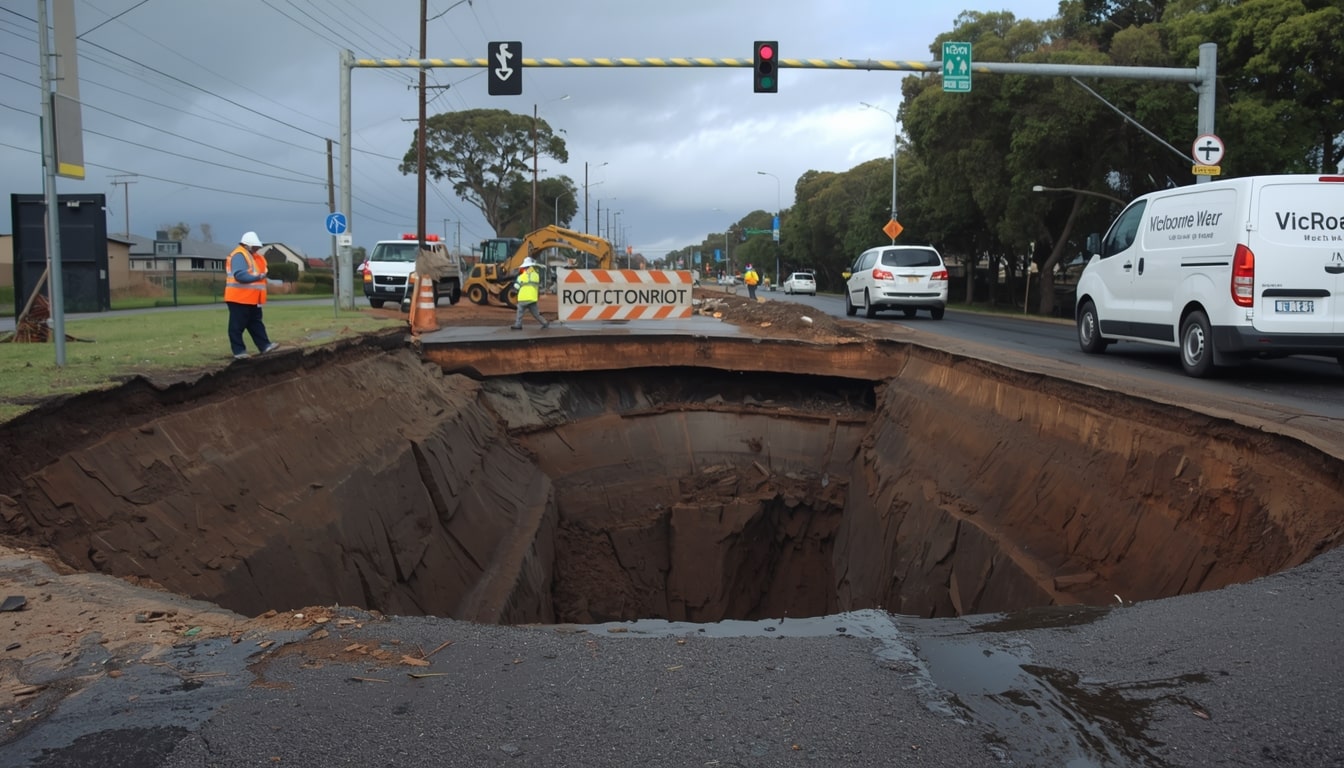
On December 30, 2025, in Melbourne, the western suburbs faced severe traffic jams after a massive sinkhole opened on a major arterial road in Sunshine West without warning. The event, which happened in the middle of the night, had closed a section of Fairbairn Road near the crossroads with Anderson Road, compelling the government to shut several lanes and divert traffic during the heavy pre-New Year traffic.
At around 2:00 AM, the emergency crews arrived at the scene after being called in by people leaving for the early morning; however, no serious accidents occurred; however, the result was massive backups that spilt into the morning commute.
What Caused the Sinkhole
The probes indicate that a leaking water main under the road is the major culprit, worsened by heavy rains that saturated the soil and left the infrastructure weak. According to VicRoads engineers, the region’s age-old pipeline network, built in the 1980s, has been straining due to urbanisation and resulting traffic congestion.
This sinkhole has a width of about 5 meters and a depth of 3 meters, exposing underground utilities and posing a danger to the surrounding buildings. Melbourne Water confirmed the rupture, saying that the combination of high water pressure and ground erosion caused it. This is similar to other incidents in the city that raise concerns about the maintenance of the underground systems in the suburbs that were rapidly growing.
Traffic and Residents’ Effect
The diversion affected thousands of drivers, forcing them to use local roads, such as Ballarat Road, which led to traffic jams and delays of up to an hour. The transport system was also affected, as bus routes 220 and 410 were diverted, leaving passengers stranded at bus stops amid the confusion.
The residents of Sunshine West and nearby communities complained about the vibrations and noise caused by the first collapse, and some had temporarily moved out of their houses because they feared being harmed.
Companies in the affected areas, such as warehouses and shopping centres, experienced delivery delays, which would cause significant losses to the local economy. One of the residents, Emily Carter, said the roadblock caught her off guard and forced her to postpone her appointments and work from home.
Authority Feedback and Remediation
VicRoads and Melbourne Water organised repairers promptly and sent heavy machinery to stabilise the site and begin filling the hole with stabilised materials. There was an introduction of temporary traffic management plans, which included a reduction of the lanes and a speed limit, and detour signs were used to direct the drivers through the hazard.
The Brimbank City Council contributed by informing the community about updates via alerts and social media. Minister of Roads and Road Safety, Jacinta Allan, visited the site, promising to expedite repairs and hoping to have it partially operational by evening. Affected businesses are being considered for compensation, and a structural review of the nearby roads is being conducted to identify areas of weakness.
Looking Ahead: Improving Infrastructure Resilience
With repairs underway, analysts encourage proactive repairs with ground-penetrating radar to identify problems at an early stage. As Melbourne’s population grows, it is essential to invest in modernising its utilities to ensure they do not disrupt its future.
Drivers have been encouraged to update their traffic apps, and delays could still be experienced even in the new year. There were no injuries, but the event highlights the importance of maintaining the urban setting with care.