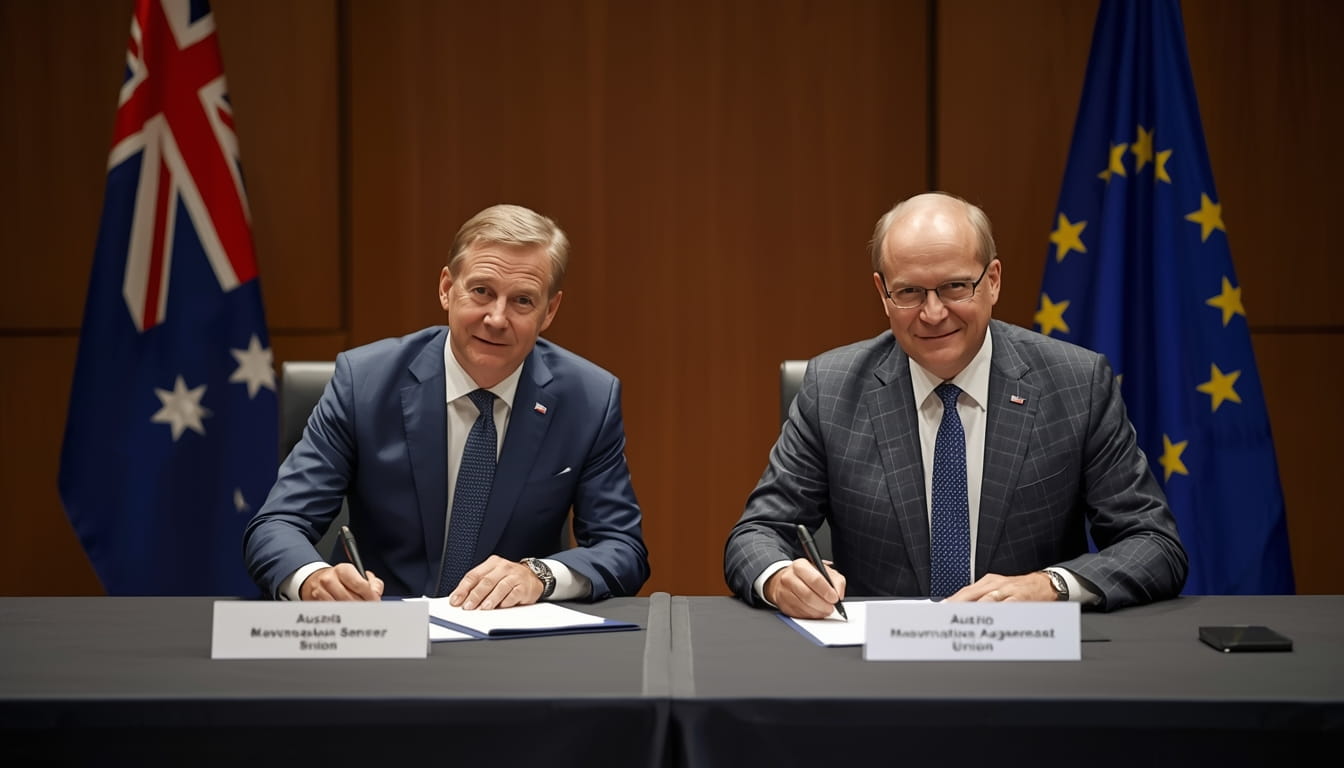
Australia and the European Union have entered into a vast free trade pact, a groundbreaking step in global trade after 10 years of negotiations. The agreement will open up many opportunities for exporters and investors on both sides by removing tariffs on more than 90% of goods and services.
The agreement eliminates impediments that previously limited the entry of Australian agricultural products and resources into the European market. Meanwhile, it is liberalising the Australian market for European machinery, pharmaceuticals and luxury goods. The authorities described the agreement as a levelled structure that safeguards sensitive sectors and encourages healthy competition.
Economic Effect and Developmental Forecast
Within five years, analysts estimate that the free trade deal will stimulate bilateral trade by over $25 billion a year. Australian farmers, miners, and service providers are likely to experience booming growth, and European manufacturers will have a secure source in a stable country that will act as a reliable partner. Other provisions in the agreement include the digital trade and intellectual property rules of the day, which promote innovation and collaboration in renewable energy and technology.
Social and Environmental Protection
The agreement is embedded in powerful commitments to sustainability and labour standards, ensuring that economic benefits are aligned with environmental protection. The two regions will engage in green initiatives and train their workforces to facilitate amalgamation in the affected sectors.
With the deal in place, governments have promised support programs to help businesses adapt. This historic achievement has strengthened diplomatic relations and serves as an excellent example of open trade in an era of global insecurity, paving the way for mutual prosperity.