The History of Melbourne's Street-Art Laneways
How a network of grimy service lanes went from a graffiti crackdown target to one of the most photographed urban art landscapes in the world.
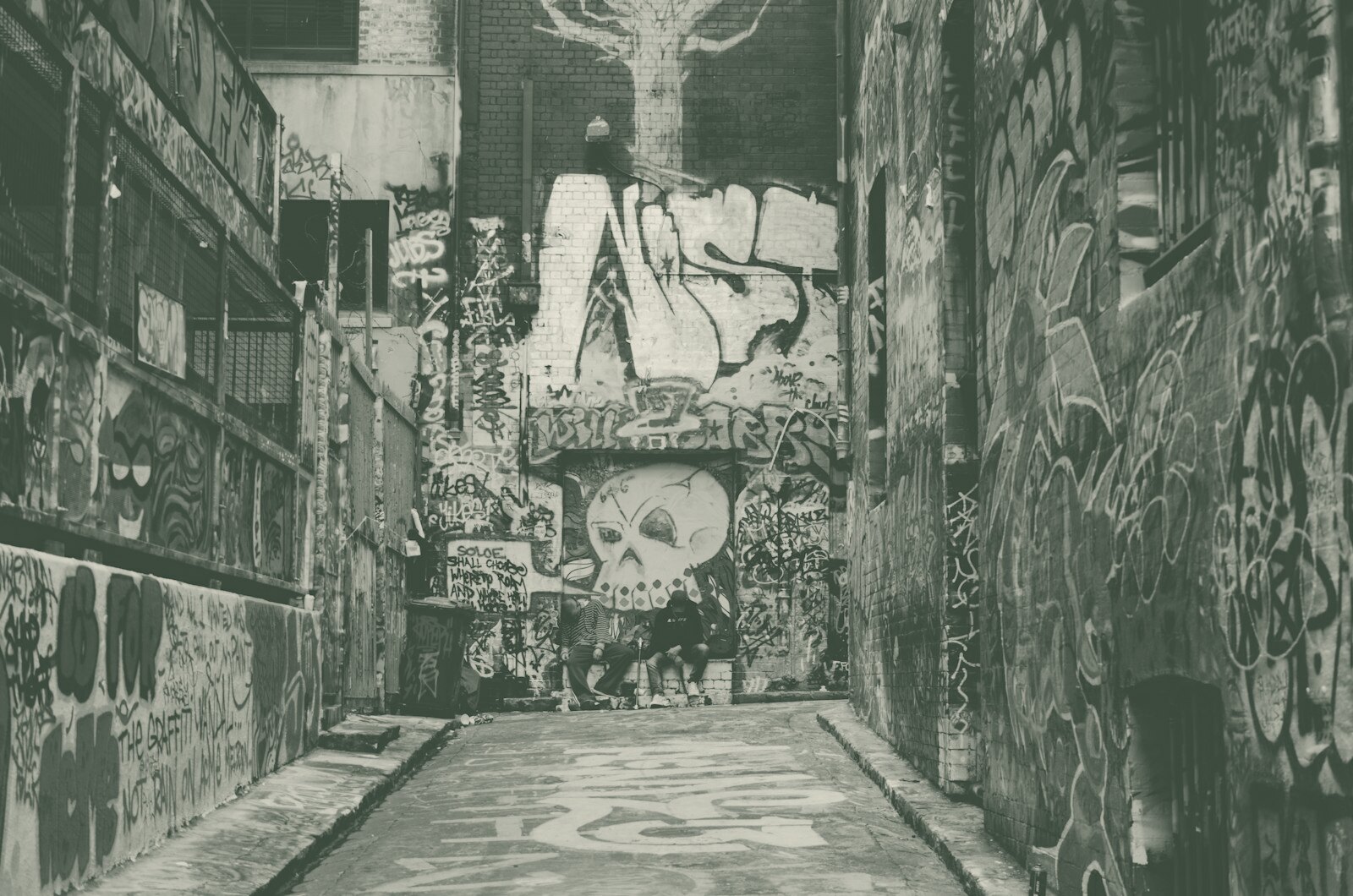
Service lanes, not showcases
Melbourne’s laneways were never designed with art in mind. They were built in the Victorian era as service access for the grand buildings along Flinders Lane, Collins Street and Bourke Street, used for deliveries, rubbish collection and rear entrances. For most of the twentieth century they were simply the city’s back-of-house: narrow, dim and largely ignored once businesses closed for the day. That neglect is precisely why they became available for something else. Blank brick walls, low foot traffic after hours and a lack of surveillance made them a natural canvas for anyone with a spray can and no permission to use it.
The graffiti wave of the 1980s and 90s
Melbourne’s laneway art has its roots in the same hip-hop-influenced graffiti culture that spread through cities worldwide from the late 1970s onward. Tagging and pieces appeared on trains, walls and lanes largely as an illicit subculture, and for a long time the city’s response mirrored that of most Western cities: graffiti was treated as vandalism, and property owners and authorities spent money removing it as fast as it appeared.
What changed Melbourne’s trajectory was the parallel rise of stencil art through the 1990s. Stencils allowed artists to work faster and with more intricate imagery than freehand tagging, and a distinct local style developed, political, satirical, often referencing pop culture. Because stencil work looked more like considered art than territorial tagging, it was harder for the public, and eventually councils, to dismiss it as pure vandalism. Laneways such as Hosier Lane, close to Federation Square, became known among artists and a small circle of enthusiasts as places where stencil and paste-up work accumulated in dense layers.
From clean-up target to cultural asset
The turning point through the 2000s was as much about attitude as legislation. Melbourne City Council, tourism bodies and cultural institutions began to recognise that this unsanctioned art was drawing visitors and photographers on its own, without any marketing spend. Rather than treating every laneway wall identically, the city moved towards a more selective approach: some areas were actively cleaned and protected from graffiti, while others, most famously Hosier Lane and the adjoining AC/DC Lane, were effectively left to evolve as living galleries, with work painted over and replaced by new work in a constant cycle.
This didn’t mean street art became legal in a blanket sense. Victoria’s graffiti laws still distinguish between art created with the owner’s consent and unauthorised graffiti, which remains an offence regardless of artistic merit. What shifted was practice: property owners in certain laneways began tacitly or explicitly allowing artists to paint, permit systems were introduced for legal walls, and council policy began to treat street art as a distinct cultural form worth managing rather than simply erasing. The Graffiti Prevention Act, which sits within Victoria’s state legislation, still underpins the legal position that unauthorised marking of property is prohibited, even as sanctioned art flourished a few streets away.
Institutional recognition
By the 2000s and 2010s, Melbourne’s street art had moved from subculture to subject of institutional interest. Local galleries and eventually national ones began collecting and exhibiting stencil and street art as a serious practice, and walking tours, guidebooks and council-produced maps started treating laneway art as heritage in its own right rather than a problem to be managed. Some individual works and artists gained enough recognition that their pieces were deliberately protected rather than painted over, a striking reversal from the removal-first approach of earlier decades.
This institutional embrace created a genuine tension that persists today. Street art’s original power came from its illegality and impermanence: it existed outside the rules, and its temporary nature was part of the point. Once councils began issuing permits, curating which walls were protected and promoting laneways as tourist attractions, some argue the work lost the edge that made it interesting in the first place. Others see it as a natural evolution, proof that a once-criminalised practice could be reassessed and valued without losing all of its spontaneity, since most legal walls are still repainted constantly by new artists.
A living, changing history
What makes this history unusual is that it has no fixed endpoint. Because the laneways are still active canvases, the record of Melbourne’s street art history is largely painted over itself, layer after layer, year after year. There is no single preserved artwork from the 1990s to point to in most laneways. Instead, the history lives in photographs, council archives, gallery collections and the ongoing practice itself. For anyone wanting to understand current rules on what can legally be painted where, or how the city balances heritage protection with active laneway culture, the primary sources are the relevant government and council bodies rather than any single walking tour.