How Melbourne's sporting calendar is built, and why it works
Behind every major event on Melbourne's sporting calendar is a deliberate strategy of shared venues, temporary infrastructure and year-round bidding that turns the city into a rotating stage.
A calendar, not a coincidence
Melbourne did not end up hosting a dense sequence of major sporting events by accident. For decades, state government and industry bodies have run a deliberate major events strategy, bidding for and scheduling fixtures so that the city has something significant happening across most of the year rather than a single peak season. This is coordinated through agencies such as Visit Victoria and the state’s major events unit, working alongside sport-specific bodies like the AFL, Tennis Australia and the Australian Grand Prix Corporation. The aim is straightforward: fill hotel rooms, restaurants and flights in months that would otherwise be quiet, and give the city an international profile beyond its arts and food scenes.
This matters for anyone living in or visiting Melbourne because it explains why certain periods feel busier than others, why some venues seem to host wildly different events within weeks of each other, and why the city invests so heavily in infrastructure that is only fully used a handful of times a year.
One precinct, many uses
A defining feature of Melbourne’s approach is reuse. Rather than building a separate stadium for every sport, the city concentrates major venues in a small number of precincts and adapts them repeatedly. The Melbourne Cricket Ground switches between cricket and Australian rules football within the same season, sometimes within the same week. Rod Laver Arena and its surrounding precinct, built for tennis, hosts concerts and other indoor events for much of the year when the tennis crowds have gone home. AAMI Park serves multiple football codes. This is a deliberate planning choice: heavy, expensive infrastructure is justified by keeping it in near-continuous use rather than building bespoke venues that sit empty most of the year.
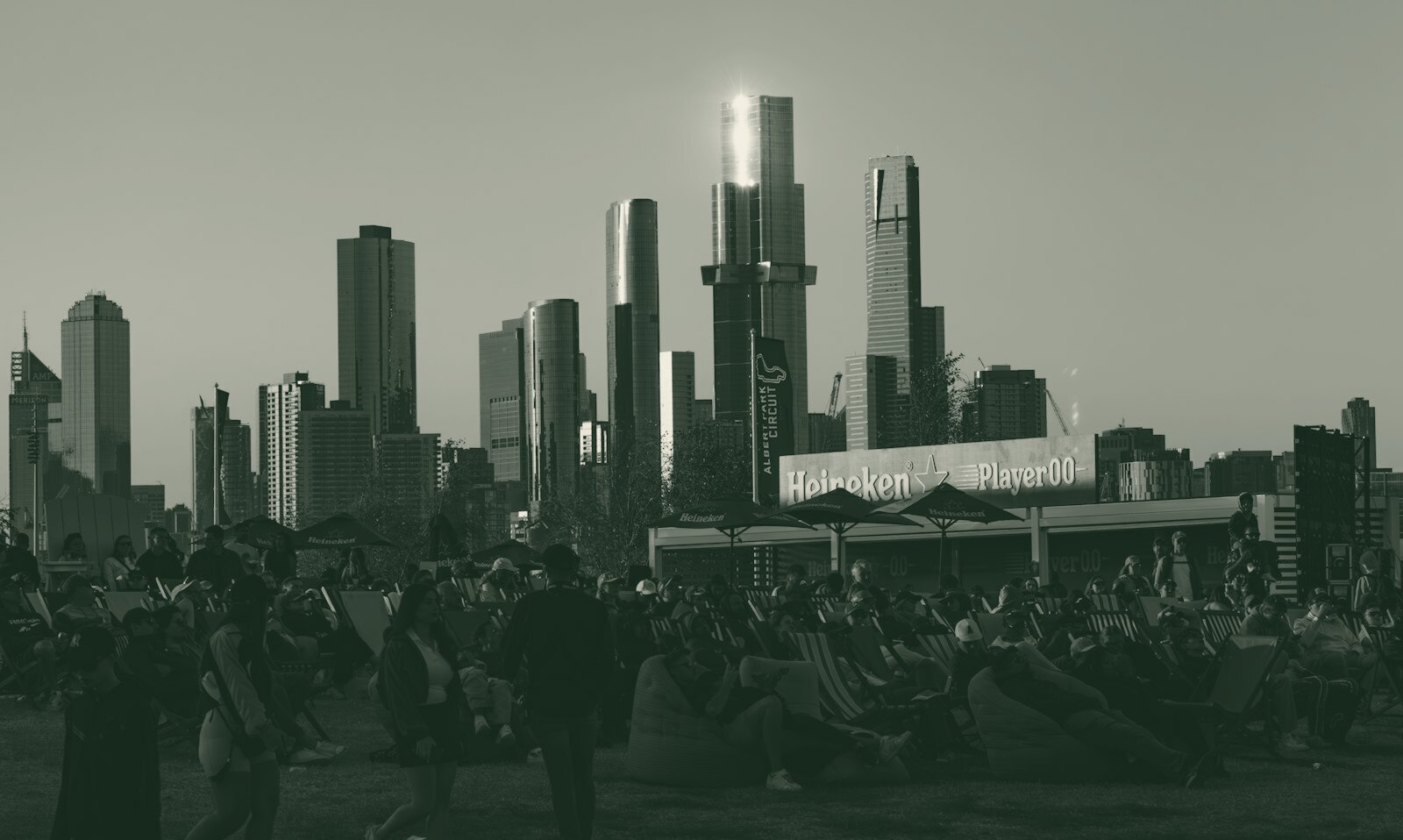
The most visible example of temporary conversion is Albert Park, where public parkland is closed off and rebuilt into a race circuit for a short period each year, then returned to open space. It is a useful illustration of how much planning goes into a single event: road closures, temporary grandstands, security fencing and public transport changes are organised months in advance, then dismantled just as methodically. Residents who live nearby will notice the buildup and teardown far more than the event itself.
Why the timing matters to the city
Events are not scheduled randomly across the year. Organisers try to space marquee fixtures so that hospitality, accommodation and transport demand is spread out rather than clustered. A summer of cricket and tennis is followed by an autumn motor racing event, then a winter dominated by football finals, then spring racing and more football finals. Each of these draws a different mix of local, interstate and international visitors, which is part of why Melbourne’s tourism and hospitality sectors treat the sporting calendar as core planning infrastructure rather than a bonus. Hotels adjust pricing around known event windows, and many hospitality and retail businesses in the CBD structure staffing and stock around the same dates.
This rhythm also shapes public transport planning. Timetables, extra services and event-day arrangements are typically built around the known sporting calendar well in advance, which is one reason the city can move very large crowds in and out of a single precinct without the network being redesigned each time.
The economic logic behind the bidding
Hosting rights for many recurring events are secured through formal, often confidential, agreements between the event’s governing body and Victorian government agencies, generally justified on the basis of tourism spend, media exposure and the broader profile it gives the city and state. These deals are periodically renegotiated, and it is common for host cities to compete against each other to retain or attract events. This is worth knowing if you read about a contract renewal or an event’s future being uncertain: it usually reflects normal commercial negotiation rather than any change in the event’s popularity.
What this means for residents
For people living in Melbourne, understanding the logic of the calendar is more useful than memorising it. Big events cluster around a small number of precincts, are usually planned and publicised well ahead of time, and follow predictable patterns of setup and teardown. If a park, road or venue near you is behaved unusually, it is worth checking whether an event is scheduled there before assuming it is permanent disruption. Official venue and organiser websites, along with the City of Melbourne, publish planning and traffic information ahead of major fixtures, and these are the most reliable places to check current dates, ticketing and access arrangements rather than relying on general assumptions about when things happen.
Where to check current details
Because exact dates, venues and formats can change year to year, always confirm specifics with official sources rather than older articles or general knowledge.